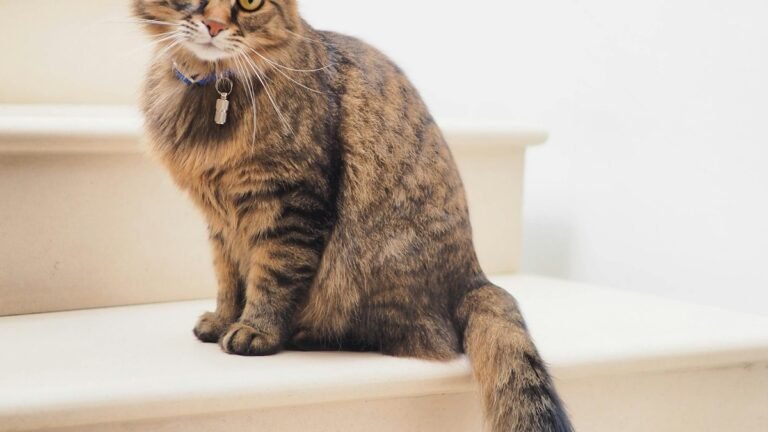
How to Cat-Proof Your Christmas Tree (So It Survives December)
How to Cat-Proof Your Christmas Tree (So It Survives December)

It was standing when you went to bed. In the small hours came a soft, expensive crash; by morning the tree is at forty-five degrees and two baubles are in the hallway, and the cat is sitting inside the branches looking like she pays the mortgage. Understand this: to her, you have not bought a tree. You have installed a climbing frame, hung it with toys, in the warmest room in the house.
There is no such thing as a cat-proof tree. The realistic goal is a cat-resistant one: anchored so it cannot fall, decorated so breakable and swallowable parts are out of reach, stripped of the dangerous bits, with a better offer nearby. Do those four things and most cats lose interest within a week.
Why every cat christmas tree becomes a climbing frame
See it from her side. A tree is the tallest new object in the house, it smells of the outdoors, it sways when touched, and it is covered in shiny, dangling things that move like prey. Add warm lights and a skirt to sleep on: the perfect enrichment device. You are negotiating with a very reasonable hunter, so the plan below works with her instincts, not against them.

To her, the tree is tall, sparkly and clearly provided for her.
Anchor it like you mean it
Start with the stand: wide, heavy and metal beats narrow plastic every time. For a tall tree, screw the stand to a plywood square for a bigger footprint. Then add the insurance most people skip: clear fishing line from the top third of the trunk to a hook in the wall or ceiling. Done neatly it is invisible, and it turns a climbing launch into a wobble instead of a crash. Place it in a corner — two walls to anchor to — with sofas, shelves and tables, her launch pads, kept well away.
Real trees: cover the water, sweep the needles
If your tree is real, the water in the stand is the quiet hazard. Tree water can hold fertiliser residue and bacteria — some households even add aspirin or preservatives to it. Use plain water only, and cover the stand — snug tree skirt or foil — so she cannot reach it. Sweep up fallen needles daily; they are sharp enough to irritate or puncture the gut if swallowed. Artificial trees are not innocent either — chewed-off plastic needles carry the same risk.
Ornaments: precious high, shatterproof low
Decorate in zones. For the first two or three days, leave the bottom third bare or shatterproof-only. Glass and heirloom pieces go in the top half, out of batting range. And ditch the loose metal hooks: easy to swallow, nasty to pass. Hang ornaments on ribbon loops or florist wire twisted snugly — both survive a paw swipe.
One decoration does not go on the tree at all: tinsel. Cats cannot resist the way it moves, and a swallowed strand can bunch and saw through the intestine. The same goes for ribbon and string on presents. Edible decorations are out too: chocolate baubles are poison, and salt-dough ornaments can cause salt poisoning.

Everything at paw height will be tested: shatterproof low, precious high, hooks nowhere.
Lights and cords
Cords are the other chew target. Run them along the wall, fit a cheap cord cover over exposed stretches, and unplug the lights whenever you go to bed or go out. A cat who chews a live cord can get mouth burns or a serious shock, so check the cable weekly for teeth marks; find any, and cover that stretch or keep the lights off.
Give her a better offer
The households that win December cheat: they give the cat a legal tree. Put her cat tree or scratcher right beside the real one, rub it with catnip, and praise her for using it. A ten-minute play session before bed burns off the evening hunt. Short on space, a smaller tree on a sturdy table or a felt wall tree gives the look with far less to climb. And the tip that changes the whole month: put the tree up undecorated for a day or two and let her investigate it into boredom. When the baubles arrive, the tree is old news.
Step-by-step: putting it into practice
- Day one: Tree up, undecorated, in a corner — heavy stand, fishing-line anchor to a wall hook, water covered.
- Day two or three: Lights on, cords covered, then ornaments in zones — shatterproof low, precious high, everything on ribbon or wire, never hooks.
- Every day: Sweep needles, check the water cover and cords; tinsel, ribbon and edible decorations stay out of the house.
- Every evening: Ten minutes of play ending near her own tree, then lights unplugged.
Common mistakes to avoid
The biggest is decorating fully on day one, then fighting a month-long war you declared yourself. The second is the spray bottle, which teaches “trees are off limits while the human is awake” — and makes the game more exciting. Owners also park the tree beside a sofa arm — a perfect launch pad — and assume a cat who fell out of it once has learned. She has learned the landing, not the lesson. And do not relax in week three, when the tree is driest and the needles are dropping.
If she eats needles or tinsel
If you see tinsel, string or ribbon hanging from her mouth or bottom, do not pull it — phone your vet immediately. A strand anchored inside can saw through the intestine if tugged. The same call applies if she vomits repeatedly, goes off her food or seems lethargic after chewing needles or decorations. These are same-day problems.
Frequently asked questions
Is a real or an artificial tree safer with a cat?
Neither wins outright. Real trees bring drinkable stand water and sharp needles; artificial ones bring plastic needles and sometimes flocking she can chew. An artificial tree in a heavy stand is the lower-maintenance choice, but a real one is manageable if it is anchored and its water covered.
How do I stop her climbing, not just decorate around it?
You mostly cannot forbid it, so make it dull: anchor the tree so climbing produces no exciting crash, keep lower branches bare, and make her own tree the interesting one with catnip and praise. Most cats give up within a week once the tree stops responding.
Is tinsel really that dangerous if she only plays with it?
Playing is how it gets eaten — the barbs on a cat’s tongue make a strand hard to spit out, so it tends to go down. Swallowed tinsel is a genuine emergency risk, so the rule is simple: it does not come into the house.
What about poinsettia and other Christmas plants?
Poinsettia has a scarier reputation than it deserves — mildly irritating, it may cause drooling or an upset stomach, so keep it out of reach but do not panic over a nibble. The real emergency plant is lily: even pollen groomed off the coat can be life-threatening to cats, as our guide to foods toxic to dogs and cats covers.
Can I use a repellent spray on the tree?
Bitter sprays work on some cats, are ignored by others, and need reapplying every day or two. Use a pet-safe one, test it on a hidden branch, and treat it as a backup to anchoring and zoning, not the plan itself.
The bottom line
Anchor it, zone the ornaments, ban the tinsel, cover the water, unplug at night, and give her a tree she is allowed to climb. That is the whole system. For the play side of the bargain, see our indoor cat exercise ideas.