Home Cat Grooming Guide: Brushing, Baths, Ears and Claws Without the Stress
Home Cat Grooming Guide: Brushing, Baths, Ears and Claws Without the Stress

Wondering about home cat grooming? “Cats groom themselves, so they don’t need any help from us.” You’ve probably heard that. Maybe you’ve said it yourself. It’s half true, which is why it sticks. Your cat does spend hours licking and smoothing her coat.
Here’s the plain answer: home cat grooming still needs you for the bits she can’t do. Brush a short-haired cat once or twice a week and a long-haired cat for a few minutes most days, check ears and teeth weekly, and check claws every week or two. That’s it — short sessions, little and often.
She can’t comb out loose undercoat, spot fleas at the base of her tail, or trim a claw curling into her pad. Catching those early also means she already knows your hands when a vet needs to handle her, instead of meeting it all for the first time when she’s ill. That early familiarity is part of home cat grooming.
Table of Contents
Choosing a cat comb and brush for home cat grooming
Start when she’s sleepy, ideally in her usual sofa spot. Let her sniff the brush, begin with cheeks and chin — where most cats love being touched — then stroke the back in the direction the hair lies. A slicker brush lifts loose hair for most coats; a metal comb afterwards tells you if there’s a tangle hiding underneath.
Believe the early warnings. Ears flattening, skin rippling, a tail starting to thump — she’s done. What catches most owners out is pushing for “just one more minute” to finish the other side. That minute teaches her to run when she sees the brush. Two calm minutes today beat ten tense minutes once a fortnight, every time.
Baths: rarely needed, sometimes useful
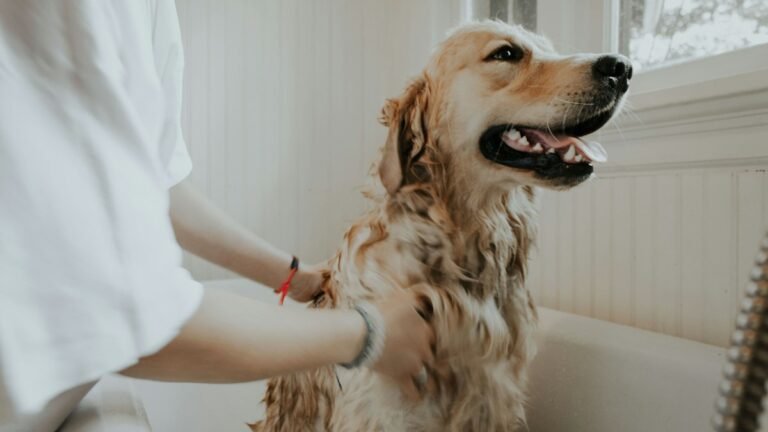
A healthy indoor cat rarely needs a bath. It strips oils, most cats hate it, and you get no extra points for doing it monthly. For a small patch of dirt, a warm damp cloth is usually enough.
Bathing does help if she’s got into something sticky or greasy, if your vet has prescribed a wash for a skin problem, or if she’s a hairless breed whose skin builds up oil. If you do bath her, run lukewarm water and lay out cat-only shampoo and towels before you fetch her, and shut the door. Never use dog shampoo or dog flea products — some ingredients safe for dogs can poison cats, especially once licked off. Keep it quick, rinse well, and let her sulk afterwards with a treat nearby. If she’s truly panicking, stop. A dirty cat can wait.

A quick lip-lift once a week makes teeth problems easy to spot early.
Ears, eyes and teeth checks
In home cat grooming, you don’t need to clean healthy ears, just look in them weekly. A bit of light wax is fine. Lots of dark, gritty debris, redness or a sour, yeasty smell isn’t. Wipe only what you can see on the outer ear with a damp cotton pad — nothing down the canal, no cotton buds, no oils.
For eyes, wipe away a little sleep with a clean damp cloth, using a fresh part for the second eye. For teeth, gently lift a lip while she’s relaxed and look for red gums, brown tartar, a broken tooth or breath that makes you recoil.
See a vet instead if you find a lump, sore skin, ear odour or discharge, head shaking, bleeding gums, drooling or a cat who stops eating — those aren’t grooming problems to scrub at home.
Claws and safe handling
Press the top of the paw gently and the claw slides out. Trim only the sharp, clear tip, well away from the pink quick inside a pale claw. On dark claws, take tiny slivers. If you nick the quick, press a clean cloth to it and give her a break — most owners do it once.
Senior cats need this most. Their claws thicken, they scratch less, and a neglected claw can curl into the pad. A scratching post by her bed helps, because cats love a stretch and scratch on waking. Nervous cat? Wrap her loosely in a towel with one paw out, and do two claws now, two later. Nobody said all ten have to happen in one sitting.

Little and often is the rule for claws: a couple now, a couple later.
Step-by-step: putting it into practice
- Get everything ready first: Brush, comb, treats, towel and trimmers beside you, so you’re not hunting through a drawer while holding a cat.
- Start without tools: Stroke her favourite spot for about 30 seconds, then do two or three brush strokes and reward her straight away.
- Let her set the limit: If she moves off, let her go. Leaving and wandering back builds more trust than being pinned down.
- End with something good: A treat, a short game or her meal. Keep the whole session under 10 minutes at first — shorter is fine.
Common mistakes to avoid
The classic mistake in home cat grooming is the weekend marathon: nothing all week, then 25 minutes trying to do brushing, ears and all four paws at once. Cats don’t bank tolerance like that.
Looming over her on a high table and grabbing a paw feels like an ambush from her side. Work at her level, in a place she chose. Using whatever’s in the bathroom cupboard is another trap — human shampoo, scented wipes and essential oils all get licked off and can make cats ill. And don’t push through growling or frantic struggling hoping she’ll “get used to it.” She won’t. She’ll just get better at escaping. Shorten it, change the spot, try again tomorrow.
Frequently asked questions
How often should I brush my cat?
Short coats: once or twice a week. Long coats: a few minutes most days. That small habit prevents mats far better than one long session when the coat is already tangled.
Can I use dog shampoo on my cat?
No. Use only products labelled safe for cats. Some dog flea treatments and many essential oils are dangerous for cats, even in small amounts.
My cat bites during brushing. What should I do?
You’re probably going on too long, or brushing somewhere she hates. Most cats love cheeks and chin but draw the line at bellies and tails. Cut sessions right back, reward calm behaviour, and stop before the bite.
Do indoor cats need claw trimming?
Often, yes — especially seniors, whose claws can thicken and curl. Check every two weeks even if you have scratching posts.
The bottom line
Picture it as a two-minute favour you repeat, not a job you conquer: a brush while the kettle boils, ears on Sunday, claws while she’s asleep in the sun. You’ll find more practical guides in our Grooming section, and our Editorial Policy and Disclaimer explain how we create this content.