How Often Should You Bathe a Dog? A Practical Guide by Breed, Coat and Lifestyle
How Often Should You Bathe a Dog? A Practical Guide by Breed, Coat and Lifestyle

Wondering how often to bathe a dog? You bath your dog on Saturday. He smells clean, his coat is soft, you feel smug. On Sunday’s walk he finds something foul at the edge of the path, drops a shoulder, and rolls in it with real joy. Now he stinks again — a day after bath day.
So can you bath him again? Yes, for a mess like that, wash him. For your normal routine, though, most healthy adult dogs do best with a bath every four to six weeks. Some oily coats need it a bit sooner, dogs with dry skin do better waiting longer, and that range is the answer when you are deciding how often to bathe a dog.
Table of Contents
What actually decides how often to bathe a dog
Coat comes first. Short, smooth coats shed surface dirt quickly, so a brush and a wipe with a damp cloth often puts off bath day for weeks. Curly coats trap dust and debris, so they need regular brushing between baths or tangles build up. Double coats fool people — the top can look grubby while the undercoat is still clean underneath. Brush thoroughly first; you may not need water at all, and that is a good first step when you are working out how often to bathe a dog.
Lifestyle matters just as much. A pavement-walking city dog stays cleaner than one who swims, digs, or goes to daycare. Greasy breeds, like many spaniels and basset types, build up oil and smell faster and genuinely need the shorter end of the range when you are deciding how often to bathe a dog. Puppies, seniors, and dogs with a diagnosed skin condition are exceptions — if your vet has set a medicated bathing schedule, follow that, even if it is twice a week for a short spell.
Signs you are bathing too often or too rarely
Too often, and you’ll see it on the skin: a dull coat, white flakes when you part the hair, and scratching that starts a day or two after the bath, not before it. Shampoo lifts natural oils away, and skin needs time to settle again.
Too rarely, and you get a smell that returns the morning after a good brush, grit you can feel in the coat, and mats forming behind the ears and under the collar. See a vet instead if you spot sores, redness, or hair loss, or itching that doesn’t ease — bathing more won’t fix an infection or allergy, and it can sting sore skin. One trap catches most owners out: the smell is blamed on the coat when it’s actually coming from ears, teeth, or a damp, unwashed dog bed. Wash the bedding and check the ears before you run another bath.

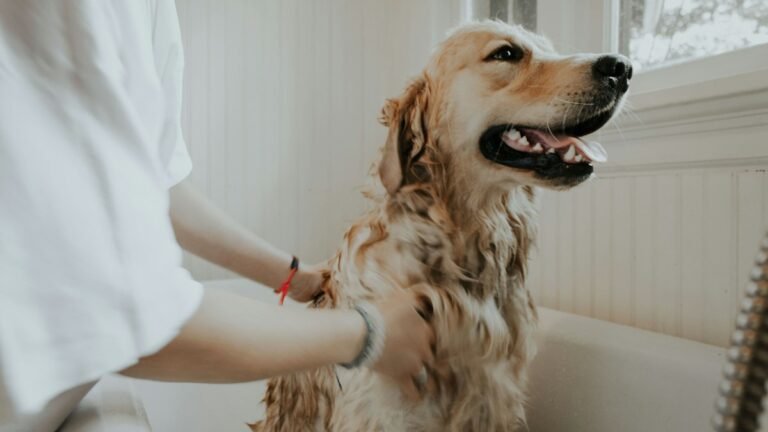
Plenty of dogs love water — the aim is to make bath time feel the same way.
Choosing water, shampoo and timing
Use lukewarm water, around 37–39°C — comfortably warm on the inside of your wrist. Too hot worsens itching, too cold makes a small or lean dog shiver. Use shampoo made for dogs, and less than you think: a walnut-sized blob for a medium dog, worked in with water, is usually enough. Extra foam just means extra rinsing, and getting the water and shampoo right matters more than frequency alone when you are deciding how often to bathe a dog.
Here’s a rule that saves a lot of itching later: rinse for at least as long as you spent lathering, then do 30 seconds more. Bath when you’re unhurried, ideally after a walk when your dog is pleasantly tired, and not straight after a meal for excitable puppies.
Making bath time calm instead of a battle
Dogs rarely hate water itself. They hate surprises — a cold hose, a slippery tub, being lifted in without warning. Put a non-slip mat or old towel in the tub, and lay out shampoo, towels and treats before you bring the dog in.
Keep it short: five minutes for a puppy, ten to fifteen for a cooperative adult. A lick mat stuck to the tiles with a smear of dog-safe peanut butter buys you a calm two minutes for many dogs. If your dog panics, rinse off any shampoo, dry him, praise him, and stop. Ending calmly teaches more than wrestling through to the end.

A dog this muddy has earned a proper bath, not just a wipe-down.
Step-by-step: putting it into practice
- Brush first: Remove loose hair and small tangles before water, because wet mats tighten and hurt to remove later.
- Wet thoroughly: Soak the coat right to the skin with lukewarm water, keeping it out of the eyes and inside the ears.
- Lather gently: Massage a small amount of dog shampoo in from neck to tail, and leave it only as long as the label directs.
- Rinse longer than feels necessary: Keep going until the water runs completely clear and the coat feels squeaky, not slippery.
- Dry and reward: Towel dry, then use a cool or low-warm dryer held at a distance if your dog accepts it. Brush once more and reward calmly.
Common mistakes to avoid
Bathing every week because it feels tidy is the classic one. Unless a vet has told you to, or your dog has a genuinely oily coat, weekly baths with a general shampoo will dry most dogs out. Running out of dog shampoo and reaching for yours — or washing-up liquid — is another. Human products are made for a different skin pH, and dish soap strips grease so hard it can leave a dog itchy for days. A plain water rinse is a better stopgap, and a gentler way to reset the schedule while you work out how often to bathe a dog.
Don’t bath a heavily matted dog hoping water will loosen the mats. It does the opposite. Work them out dry first, or ask a groomer for help if they’re tight to the skin.
Frequently asked questions
Can I bathe my dog every week?
Some dogs can — oily coats, or dogs on a vet-prescribed medicated shampoo. For most pets, weekly bathing with a normal shampoo is unnecessary and dries the skin. If smell is the reason, try brushing and washing the bedding first.
What about puppies?
Wait until at least eight weeks old for a first gentle bath. Keep the water shallow and warm, the room draught-free, and the session under five minutes. Puppies chill quickly, so dry them straight away.
My dog hates water. What helps?
Split it over days. Paws in a shallow tray with treats on day one, standing in an empty tub on day two, a short rinse on day three. Tiny, boring steps work better than one dramatic bath.
Do I need conditioner?
Short coats usually don’t. Long, curly or dry coats often benefit from a dog-safe conditioner — brushing is easier, static drops, and tangles come back slower. Rinse it out just as thoroughly.
How often should I bathe my dog in winter if their skin gets dry?
Stretch the gap by a week or two. Dog dry skin in winter is usually made worse by central heating rather than dirt, and every bath strips away some of the oils that are left, so a four-to-six-week dog often does better at six to eight weeks through the cold months. When you do bathe, use lukewarm water and a moisturising or oatmeal shampoo, and rinse a little longer than feels necessary. If flakes come with redness, heavy scratching or sore patches, that is a vet conversation, not a bathing-schedule one.
The bottom line
Back to that Sunday roll: wash the mess off, don’t make back-to-back baths a habit, and let your normal four-to-six-week rhythm do the rest. You’ll find more routines like this in our Grooming section, and you can read how we write them in our Editorial Policy and Disclaimer.